Stored product pests such as Indian meal moths (Plodia interpunctella) and sawtoothed grain beetles (Oryzaephilus surinamensis) enter living areas through commercially packaged dry goods, grains, nuts, and dry pet…
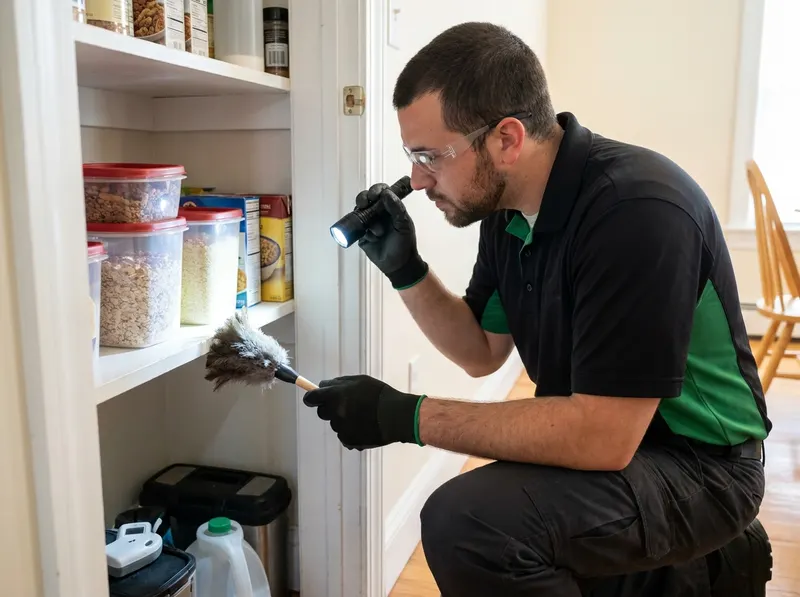
Stored product pests such as Indian meal moths (Plodia interpunctella) and sawtoothed grain beetles (Oryzaephilus surinamensis) enter living areas through commercially packaged dry goods, grains, nuts, and dry pet rations. Unlike general insect management, standard retail spray cans and surface insecticides fail against these species because eggs and larvae remain shielded deep inside sealed cardboard or unlatched plastic containers. Elimination relies entirely on definitive source isolation, mechanical extraction via HEPA-filtered vacuuming across shelving joints, and selective insect growth regulator (IGR) placement inside concealed wall voids and baseboards. Applying contact neurotoxin sprays across food surfaces introduces food safety hazards; instead, Integrated Pest Management (IPM) clears larval activity while preserving prep surfaces safe for children and domestic pets without toxic residue.
Older architectural conditions in Hartford frequently accelerate pantry pest dispersion. In multi-family Victorian homes along Asylum Hill, historic brownstones in the West End, and classic multi-deckers across Barry Square, Frog Hollow, and Behind the Rocks, shared chimney chases, lath-and-plaster wall cavities, and retrofitted tongue-and-groove pantry shelving allow pests to travel between apartment units unnoticed. If larvae encounter food spills trapped inside 1/8-inch shelf gaps, localized activity spreads across connected structures. A single kitchen cleanout remains ineffective if pests penetrate adjoining ceiling voids; professional remediation seals these ingress gaps using silicone-based elastomeric sealants, isolates harborage in historical pantry wood, and deploys precision pheromone mating-disruption lures calibrated to trap adult fliers before reproductive cycles repeat.
Decision factors dictate whether localized disposal suffices or systematic IPM remediation is mandatory. If larval presence is restricted to an isolated bag of rolled oats or birdseed that was opened within 48 hours, discarding that single container and wiping the shelf with warm water resolves the issue. If flying moths, crawling larvae, or silk webbing appear across two or more unrelated items, such as pasta boxes, dried spices, or grain packaging in Parkville or Blue Hills residences, larvae have entered the mobile pupation phase. The trade-off between self-guided store traps and targeted remediation centers on harborage access: sticky pheromone glue traps only capture adult males, failing to address hundreds of feeding larvae shielded behind trim moldings. Targeted extraction terminates existing reproductive lifecycles within 1 to 2 treatment cycles.
Every job gets a firm, written price after a free on-site visit.
Tell us about your stored product pantry pest elimination job in Hartford and we'll send a clear, written quote, usually the same day.
 Brinova Pest Services